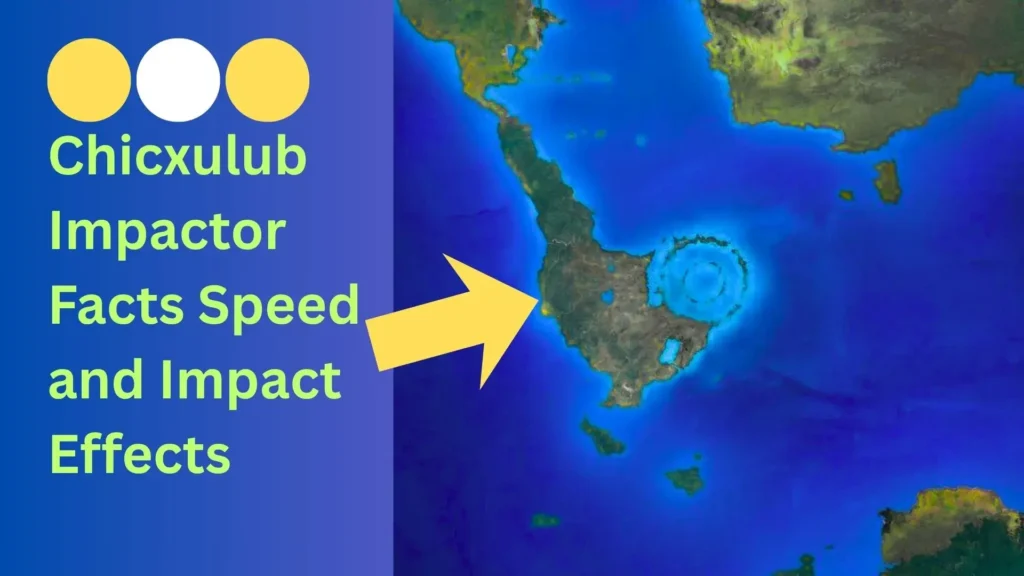
The Chicxulub impactor was a massive asteroid that struck Earth about 66 million years ago near the Yucatán Peninsula. This event triggered the Cretaceous–Paleogene extinction event which caused the extinction of most dinosaurs and many other species. Understanding this impact helps explain how life on Earth changed dramatically in a short period of time.
What Was the Chicxulub Impactor
The Chicxulub impactor is believed to have been a carbon rich asteroid measuring around 10 to 15 kilometers in diameter. It created the massive Chicxulub crater which is about 180 kilometers wide.
Key characteristics
- Diameter between 10 and 15 km
- Composition rich in carbonaceous material
- Impact location present day Mexico
- Energy release equal to billions of nuclear bombs
This event marks one of the most powerful natural disasters in Earth history.
Chicxulub Impactor Speed and Entry
The chicxulub impactor speed was extremely high reaching nearly 20 kilometers per second. At this velocity the asteroid traveled faster than most objects in the solar system.
What this speed means
- It crossed the atmosphere within seconds
- Friction generated intense heat and light
- It appeared as a bright fireball in the sky
Because of this speed the object gave almost no warning before impact making it a sudden and catastrophic event.
Thermal Impact of the Collision
The chicxulub impactor thermal impact was one of the most destructive aspects of the event. When the asteroid hit Earth it released enormous heat energy.
Effects of thermal radiation
- Immediate ignition of forests across continents
- Surface temperatures rising to extreme levels
- Firestorms spreading over large areas
This intense heat wave likely killed many organisms even before other effects like shockwaves and climate change took place.
Global Effects After Impact
The impact caused both immediate destruction and long term environmental changes.
Short term effects
- Massive earthquakes and shockwaves
- Tsunamis across oceans
- Debris thrown into the atmosphere
Long term effects
- Dust blocking sunlight
- Collapse of photosynthesis
- Global cooling known as impact winter
These combined effects led to the extinction of nearly 75 percent of life on Earth.
Scientific Evidence
| Iridium layer | High levels of iridium found worldwide |
| Shocked quartz | Minerals altered by extreme pressure |
| Crater discovery | Buried structure in Yucatán confirms impact site |
Scientists like Luis Alvarez and Walter Alvarez played a key role in proving the asteroid impact theory.
Why the Chicxulub Impactor Matters Today
The chicxulub impactor is important because it reshaped life on Earth and allowed mammals to evolve. It also reminds scientists of the potential threat posed by near Earth objects and the need for planetary defense systems.
Conclusion
The chicxulub impactor was not just an asteroid but a turning point in Earth history. From its high speed entry to its devastating thermal impact and global consequences it changed the course of evolution forever. Studying this event gives valuable insight into both past extinctions and future planetary risks.